Introduction
Raspberries are typically grown in temperate climates. Many of the common raspberry varieties require a significant amount of chill hours in order to flower and set fruit. Mysore raspberries, on the other hand, can flower and fruit well in tropical climates. Their scientific name is Rubus neveus and they are native to India. I am not completely sure if Mysore raspberries require chill hours. Here in south Florida we get only a minimal amount of chill hours. If I had to guess, I would say we get at most 10-20 chill hours per year. The Mysore raspberry flowers and fruits well here with little to no chill hours.
Why Should You Prune Raspberries?
Pruning raspberries is very beneficial. When you prune raspberries you clear out older canes, increase air flow, and encourage lateral branching. Clearing out the older canes is really helpful in making harvesting easier. Some raspberries are thornless, however, the Mysore raspberry is covered in thorns. Even the underside of the leaves have tiny thorns on them! Pruning old canes out removes these thorny canes and increases air flow, which prevents disease. Encouraging lateral branching leads to bigger harvests too since the plants sets fruit on lateral branches.
When I first set out to research how to prune my Mysore raspberry I was a bit confused. The majority of the information online that I found was for temperate gardeners and I struggled to learn how to do it. Thankfully, I found a PDF produced by the University of Puerto Rico that went in depth on how to grow Mysore raspberries. You can click here to download the PDF or you can search for the title of the PDF, which is "The Mysore Raspberry, A New Fruit for Home Gardens in the Central-Western Mountainous Region of Puerto Rico."
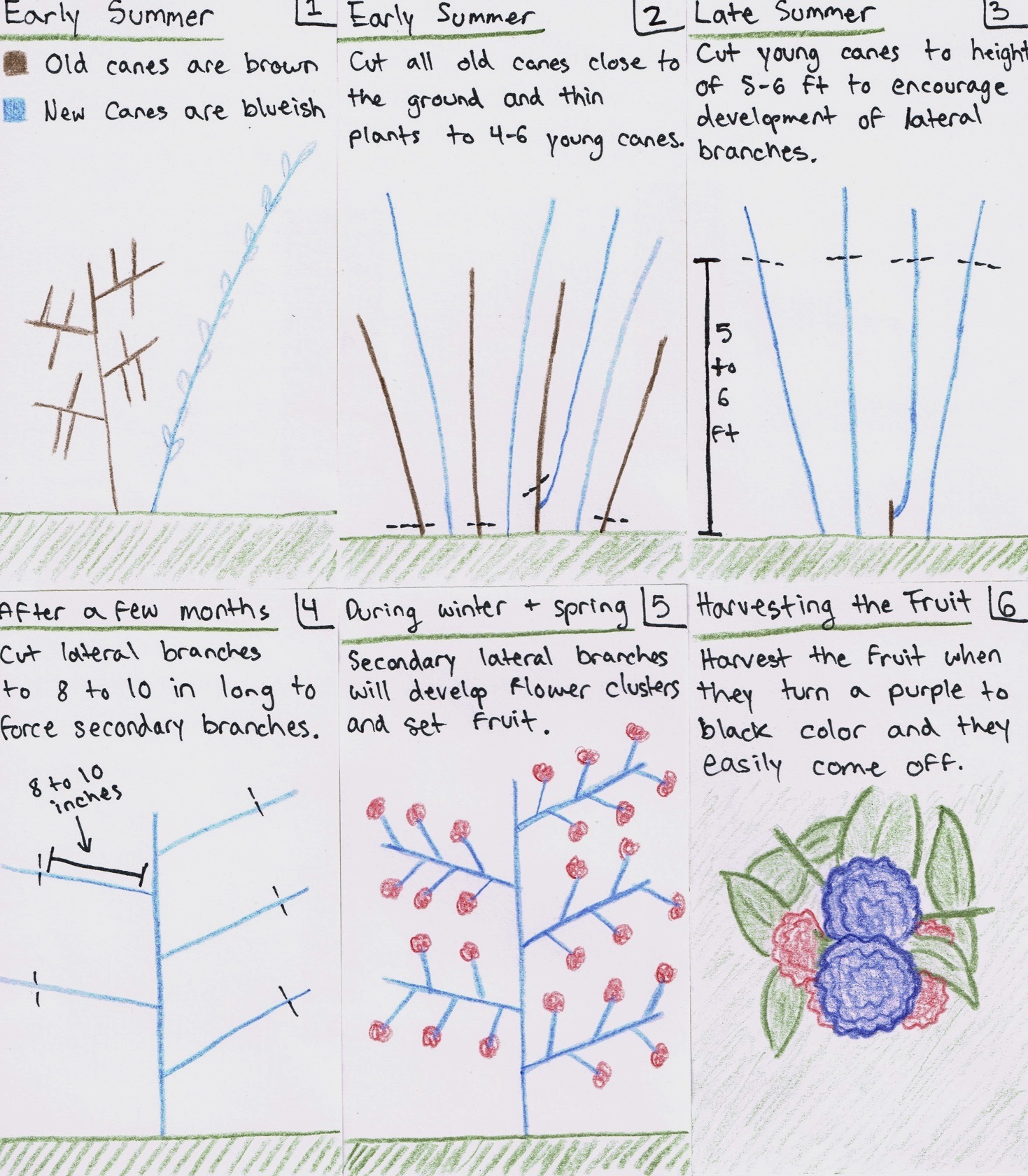
Here you can see a step by step diagram on pruning your Mysore raspberry.
How to Prune Mysore Raspberries
Above you can see a diagram I made with a step by step guide on pruning the Mysore raspberry. I also made a video where I explain the process. The pruning process I explain here will be similar when pruning other black raspberry varieties. However, the timing of the pruning will be different if you are in a temperate climate.
Step 1: Removing Dead Canes
One raspberry plant will have multiple canes. Each cane will grow for two years and then it will die. From what I have seen, the Mysore raspberry only flowers and fruits on canes that are two years old. Canes that are one year old are called primocanes and canes that are two years old are called floricanes. You can tell the difference between primocanes and floricanes by their color. Primocanes on the Mysore raspberry have a blue/grey color while floricanes are dry and brown. Below you can see the two canes. The top one is a floricane and the bottom one is a primocane.
In early summer you need to cut all the floricanes close to the ground while leaving the primocanes. Sometimes a primocane will grow directly on a floricane a few inches up the cane. In this case, cut the floricane above where the primocane is attached. At this point you should also thin out the canes. Cut back the thinner smaller canes and leave 4-6 thick and healthy primocanes.
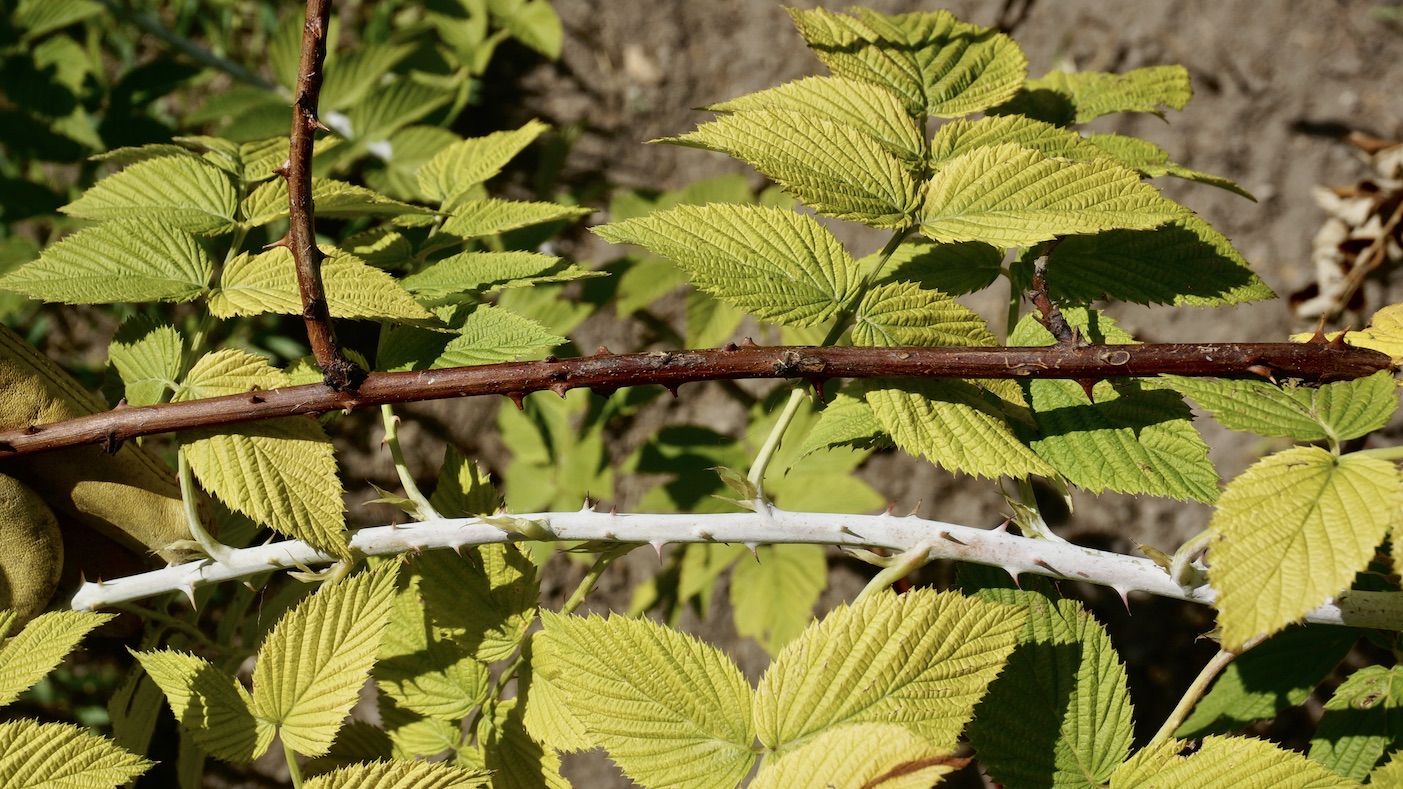
On the top is a floricane and on the bottom is a primocane.
Step 2: Tipping the Canes
In late summer you need to cut the primocanes to a height of 5 to 6 feet. You can cut them shorter or taller if you'd like. Cutting the canes will encourage lateral branches to form at every axil.
Step 3: Tipping the Lateral Branches
After a few months pass the canes will have grown lateral branches. In order to encourage secondary lateral branches to grow you need to cut the lateral branches to a length of 8 to 10 inches. Again, you can choose to cut the branches a little longer or shorter if you'd like. The main goal is to cut the tip of the lateral branch to encourage secondary branches.
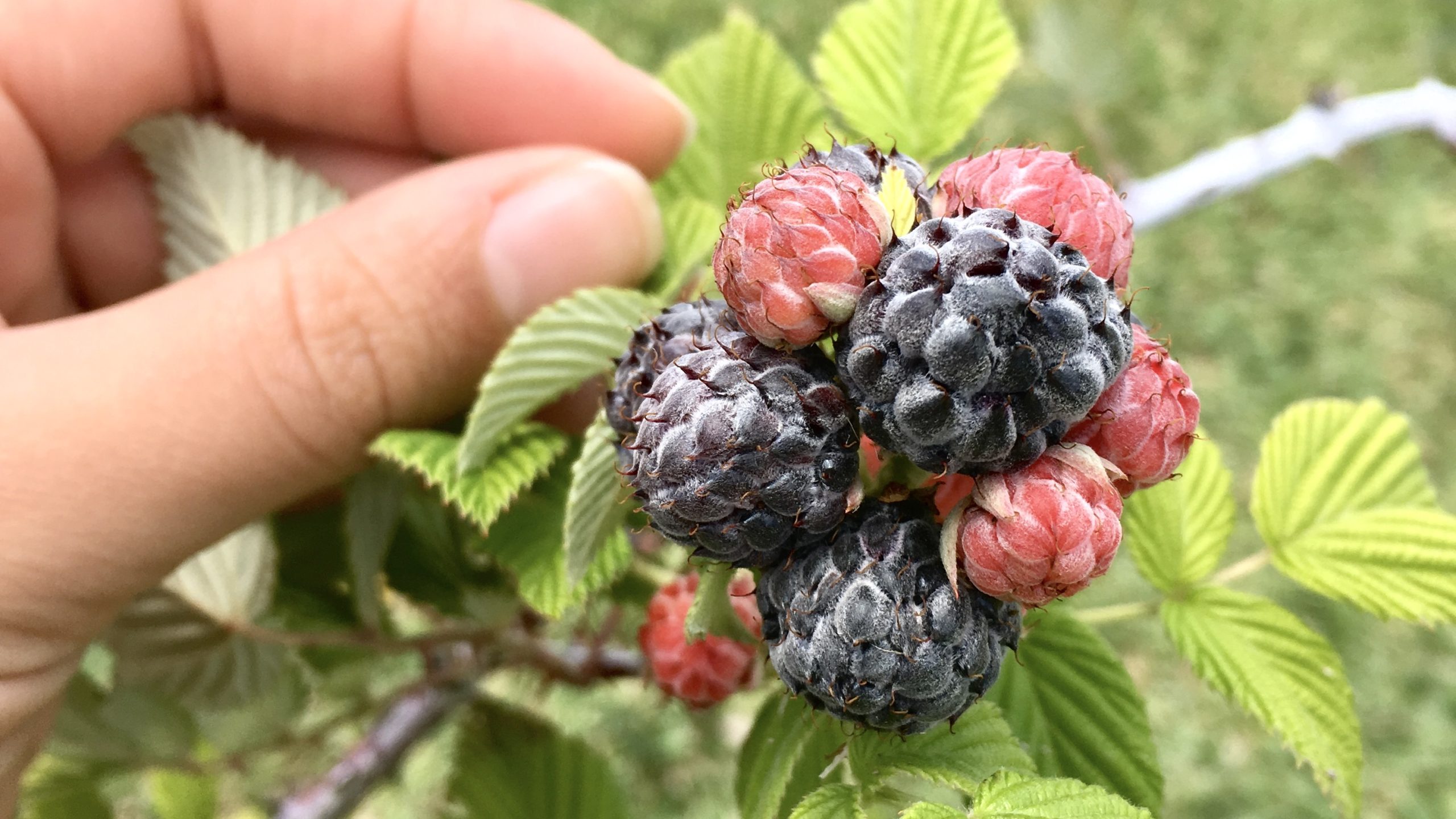
Ripe and unripe Mysore raspberries.
Step 4: Wait for the Mysore Raspberries!
After step 3 you will see that the lateral branches begin to grow branches as well. These are secondary lateral branches and each of these will flower and set fruit. In Florida, the Mysore raspberry fruits in the winter and spring. Wait until the fruits are purple/black in color and easily come off when you pull them. After the plants are done fruiting return to step 1 and repeat the process.
I hope this post was helpful. If you have any questions or knowledge on the Mysore raspberry then please leave a comment down below. To learn about other plants that do well in warm climates click here. Thank you for reading!